
Designing a Comprehensive System for Screening Children with Autism Disorder
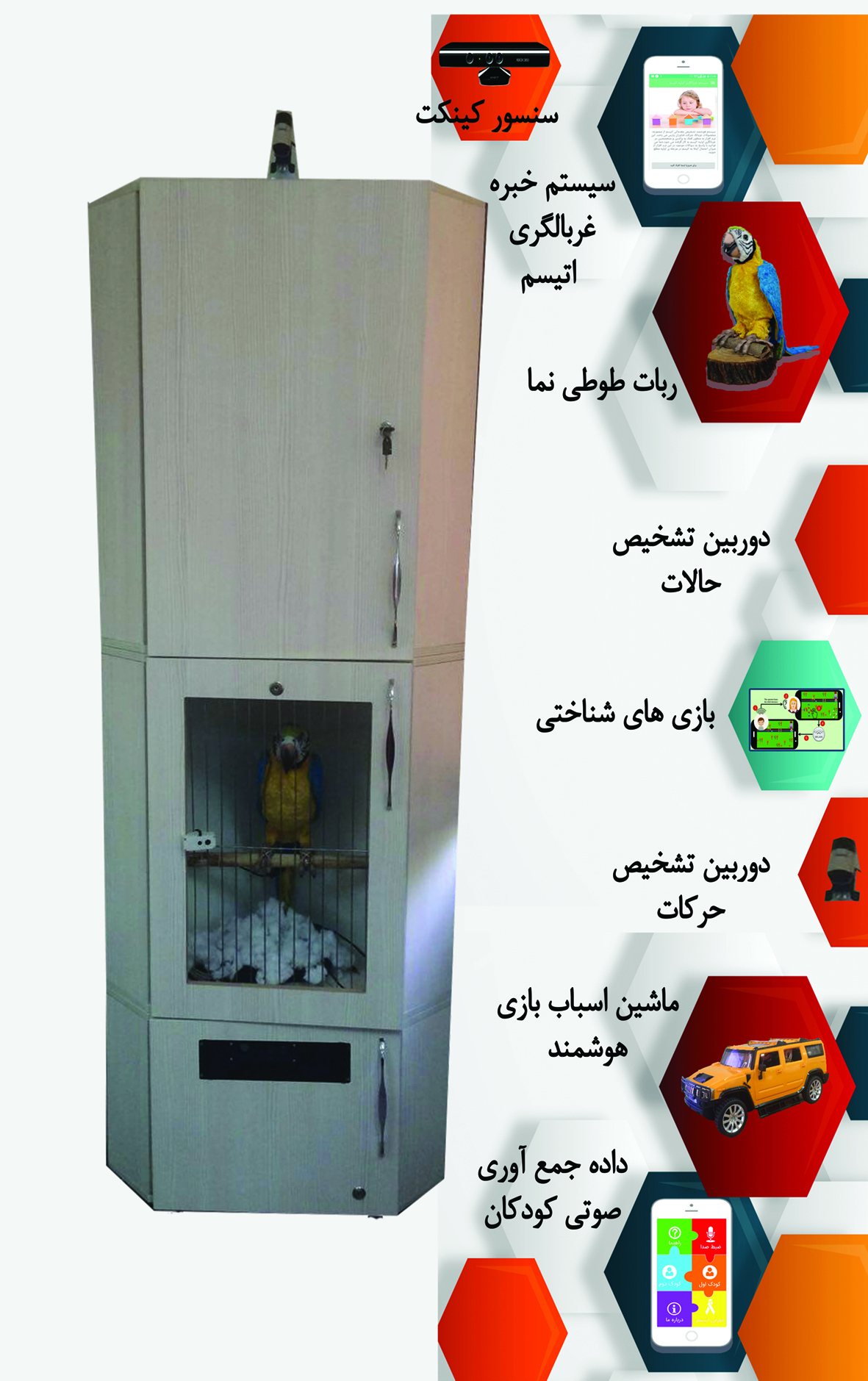
Among every 160 children, one is diagnosed with autism spectrum disorder (ASD). While prevention remains elusive, early intervention during childhood can significantly alleviate its impact. ASD manifests across a spectrum, exhibiting varying degrees of severity, thereby demanding meticulous and resource-intensive diagnosis. Despite recent technological strides introducing a plethora of tools for ASD screening in children, their singular focus may undermine reliability.
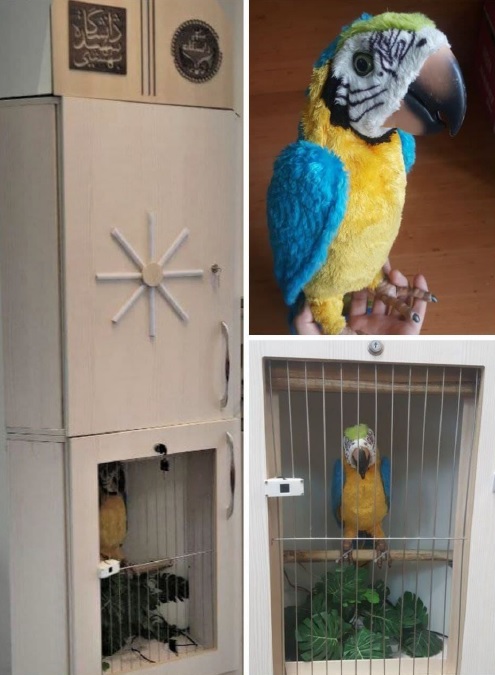
Our research seeks to tackle these challenges through a comprehensive multi-modal system employing technology-based screening tools. By amalgamating diverse modalities, our system endeavors to bolster the accuracy and confidence of ASD screening compared to individual tool screening. Our subsystems encompass a parrot-like robot, an intelligent toy car, and a light wheel, bolstered by an expert system for ASD screening that integrates parental observations of the child's behavior.
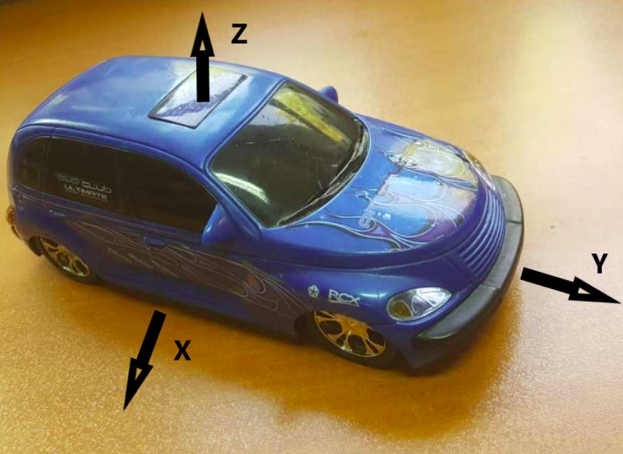
This holistic approach facilitates the collection of behavioral data through child interactions, subsequently processed via image, signal processing, and machine learning techniques. Ultimately, the system aims to provide parents with an accurate assessment of their child's behaviors, flagging potential autism red flags to prompt timely specialist visits.
In our preliminary study, published in the ICRoM conference of 2023, we focused on analyzing three distinct ASD symptom groups using three modalities: the sensorized toy car for assessing repetitive behaviors, the Lightwheel for examining sensory input sensitivity, and the Roboparrot for simulating social interaction initiation. Through the integration of outcomes from each modality, we achieved a significant enhancement in ASD screening accuracy and reliability, surpassing individual modality accuracy by over 10% on average.
In conclusion, our research underscores the pivotal role of multi-modal frameworks in optimizing ASD screening outcomes, with our initial findings showcasing a significant enhancement in accuracy and reliability. Integration of additional intelligent tools holds promise for further enhancing the reliability and accuracy of ASD screening.
Members: Bijan Mehralizadeh, Dr Hadi Moradi, Dr Hamidreza Pouretemad, Pegah Soleiman, Shahab Nikkhoo, Farid Anjidani, Negin Azizi, Javad Razi, Bahar Baradaran
Collaborating Centers: Tehran Autism (CTAD)
Related Papers:
- Bijan Mehralizadeh, Pegah Soleiman, Shahab Nikkhoo, Masoud Rahimi, Alireza Kargar, Farzam Masoumi, Hadi Moradi, Multi-Modal ASD Screening System: A Preliminary Study, 2023 11th RSI International Conference on Robotics and Mechatronics (ICRoM), pp.228-234, 2023.
- Pegah Soleiman, Hadi Moradi, Bijan Mehralizadeh, Negin Azizi, Farid Anjidani, Hamid Reza Pouretemad, Rosa I Arriaga,” Robotic Social Environments: A Promising Platform for Autism Therapy”, International Conference on Social Robotics, Bremen, Germany, 2020.
- H Moradi, SE Amiri, R Ghanavi, BN Aarabi, HR Pouretemad, “ Autism screening using an intelligent toy car”, International Conference on Ubiquitous Computing and Ambient Intelligence, pp.817-827, 2017.
- AM Shayan, A Sarmadi, A Pirastehzad, H Moradi, P Soleiman, “RoboParrot 2.0: a multi-purpose social robot”, 2016 4th International Conference on Robotics and Mechatronics (ICROM), pp.422-427, Tehran, Iran.,2016.
- Pegah Soleiman, Hadi Moradi, Maryam Mahmoudi, Hamid Reza Pouretemad, “The design, development, and deployment of roboparrot for screening autistic children”, International Journal of Social Robotics, 7 (4), 513-522, 2015.
- Pegah Soleiman, Sohail Salehi, Maryam Mahmoudi, Morteza Ghavami, Hadi Moradi, Hamidreza Pouretemad, “RoboParrot: a robotic platform for human robot interaction, case of autistic children”, Robotics and Mechatronics (ICRoM), 2014 Second RSI/ISM International Conference on, pp.711-716, 15-17 oct 2014, Tehran, Iran.
- S. Ekhtiari, H. Moradi, B. Araabi, H. Pouretemad, “Using an Intelligent Toy for Autism Screening”, The Fifth International Congress on Child and Adolescent Psychiatry, 8-11 October 2012 (Best poster award).